Project 01 · Studio BomulBang

Shh! We're Digging

Tiny kids are secretly digging a hole in your monitor. They think you haven't noticed.
Incremental · desktop companion · Windows PC · Steam release planned for 2027 Q3 · working title

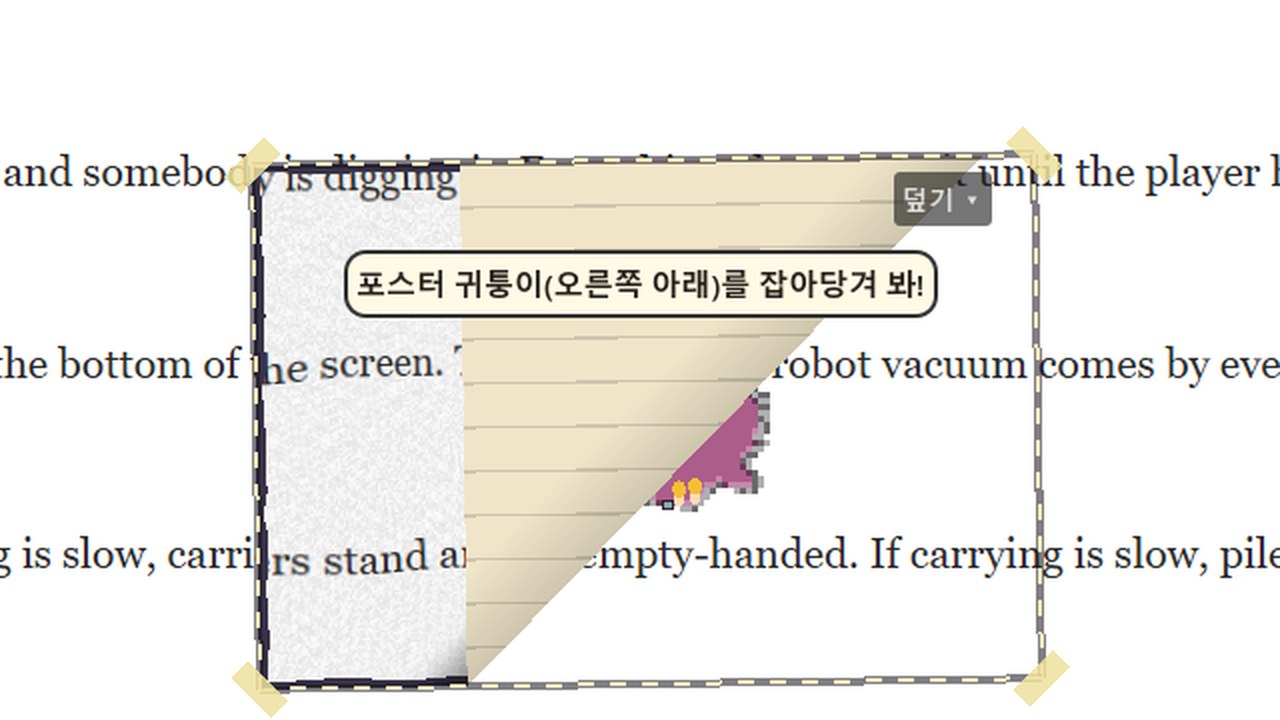
Prototype: a taped poster over a text document is peeled back from the corner, revealing a pink hole underneath.
Vertical slice, captured in Godot. Placeholder art; the UI is in Korean during development.

The game

You know. You pretend you don't.

Whatever you are working on, a crew of tiny kids is digging into your screen behind it. They hide the hole behind a poster that looks exactly like your screen, and they are sure the big, slow human hasn't noticed.

You have. Peel back the corner of your own screen, watch them work, and quietly sweep up the crumbs they smuggle out. Spend those crumbs on better tools and "accidentally" leave them nearby. The kids snicker, steal them, and dig faster and deeper: through glass, into the red, green and blue subpixels, past the backlight and down into the circuit board.

Then cover the screen again and get back to work. The game keeps going while you do.

Your screen is the poster

Peeking captures whatever is on your screen and turns it into a taped-up poster. Pull its corner like a sticker to see the hole underneath. It works on top of any app.

Bottlenecks you can see

No hidden multipliers. Slow diggers leave carriers standing empty-handed, slow carriers leave piles of crumbs, and a narrow shaft makes a queue. You read the hole and fix it.

Jobs, snacks and stolen tools

Recruit kids with snacks and assign them as diggers, carriers or camouflage crew. Tools go from gloves to picks to drills, and a workshop turns rare materials into better gear.

Renovation

When you choose, fill the hole with putty and let them start again. The putty becomes a new layer on top, so every monitor keeps a record of how many times it was repaired.

Quiet on your desktop

Covered, the game hides from the taskbar and uses almost no CPU and no GPU. A hotkey, the tray icon or the screen corner brings it back. Progress continues while you are away.

Why are they digging?

Deep under the circuit board is something that shouldn't fit inside a monitor. The game has a real ending, and an endless mode after it.

Prototype

The vertical slice, as it plays today

These are straight captures from the playable build, with a plain document behind the game so the hole is easy to see. All art is placeholder for now: the final characters and layers come with the art direction pass this quarter.
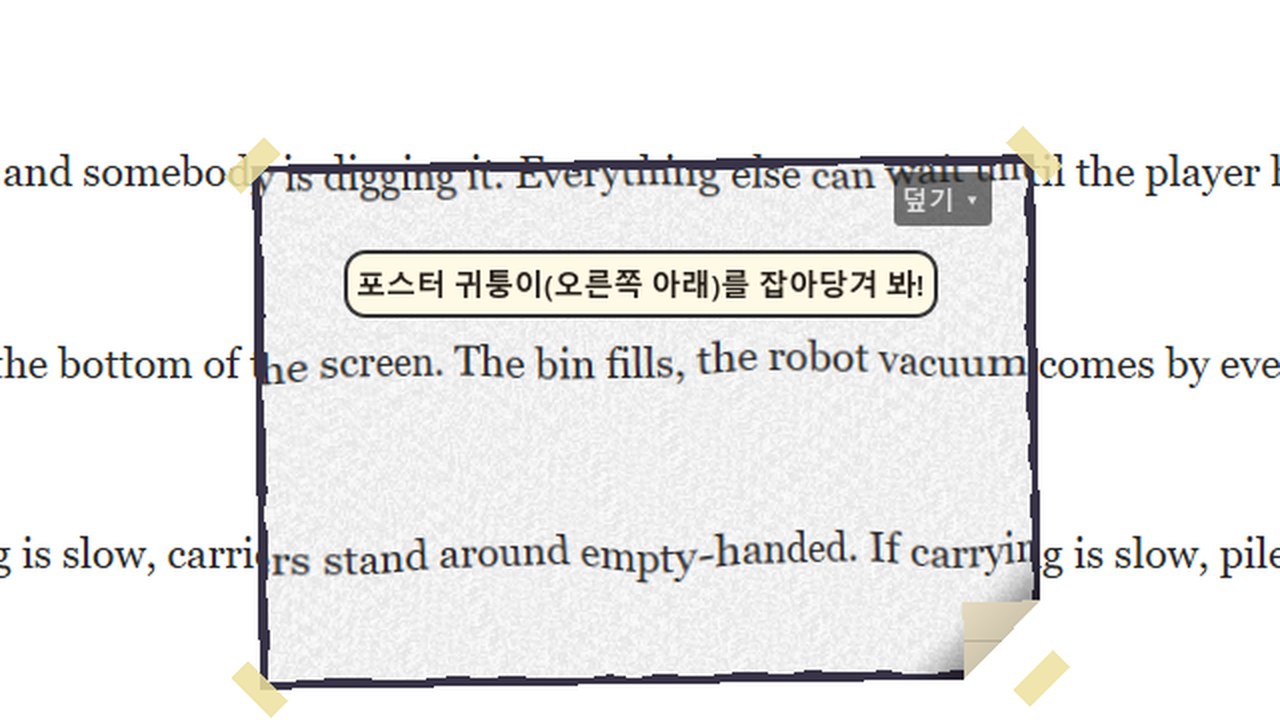
A taped poster sits over a text document. A hint bubble says to pull the bottom-right corner.
1 · CoveredThe poster is a capture of your own screen, taped over the hole. A first-time hint points at the corner.
The poster is peeled back to a folded corner, showing a pink hole with tiny blue-capped kids digging.
2 · PeekedPeeled back, the poster stays folded in the corner. The kids dig cell by cell and carry crumbs to the shaft.
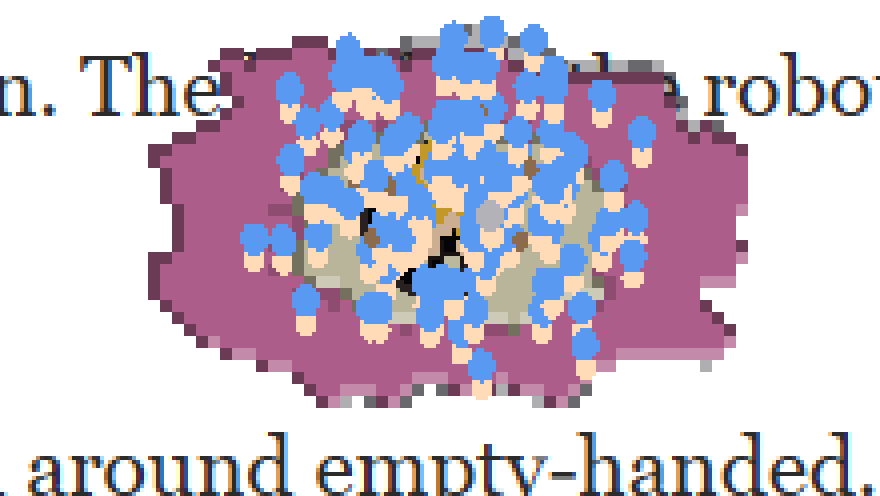
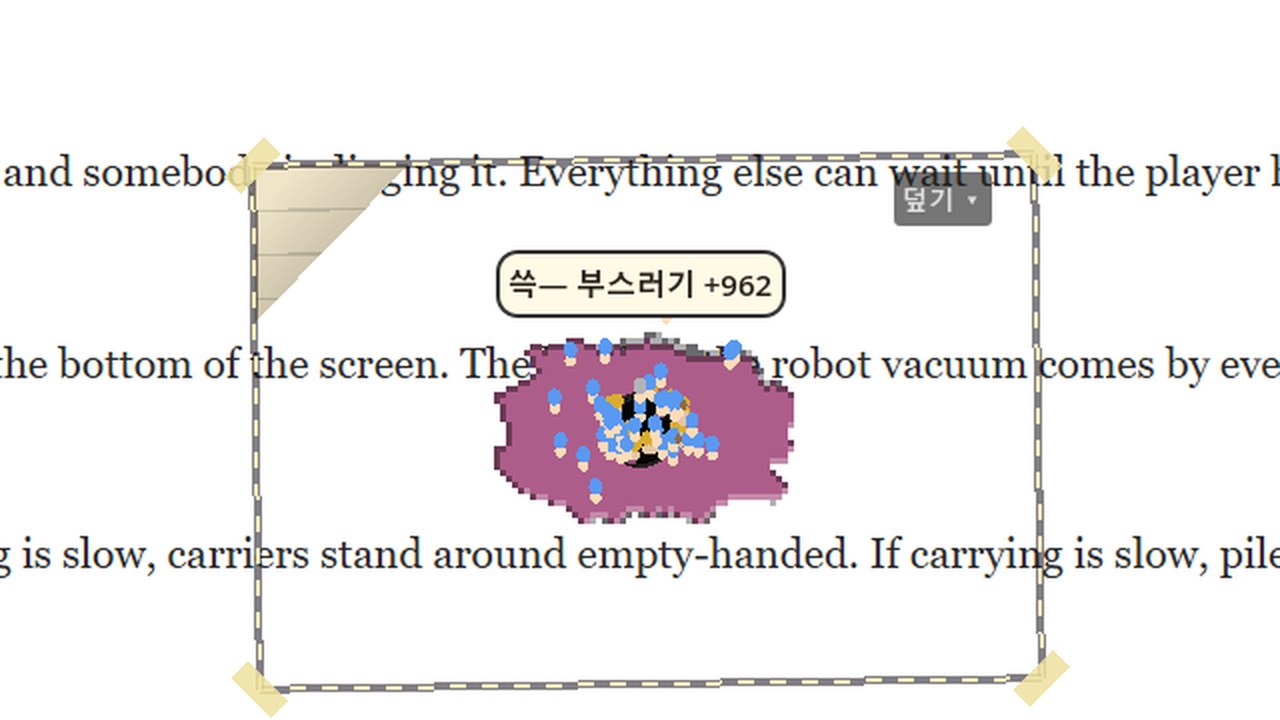
Close-up of dozens of tiny kids crowding the hole around the dark shaft.
3 · Forty-five minutes inOver a hundred kids. The queue at the shaft means carrying is now the bottleneck.
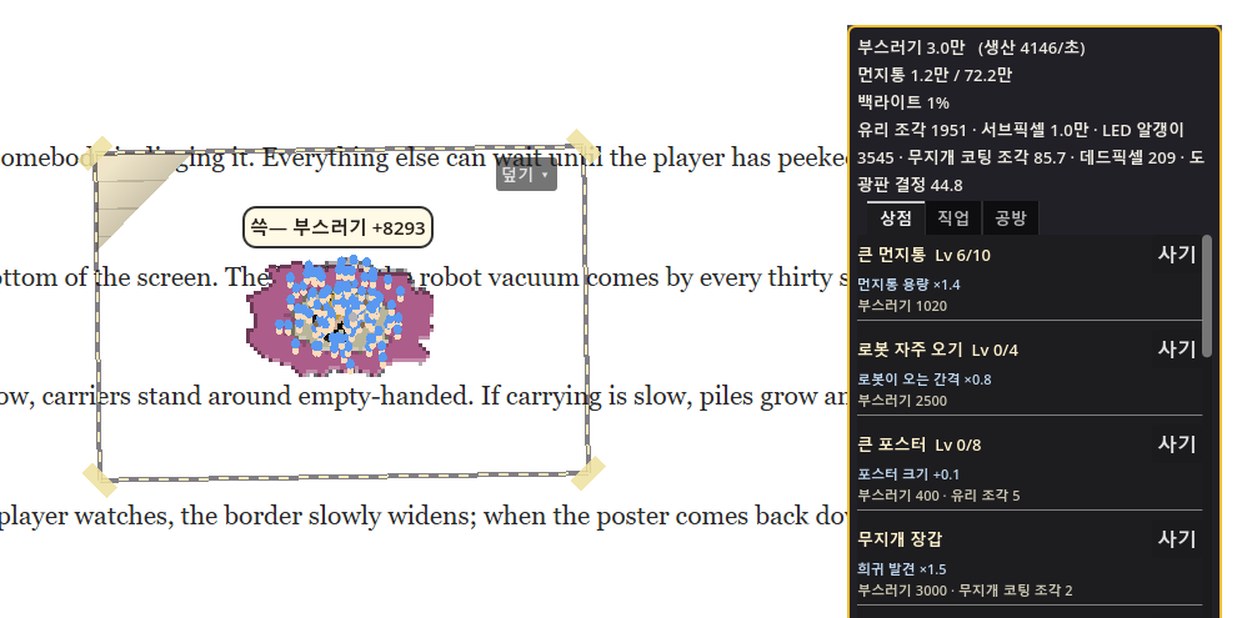
The hole with a crowd of kids next to the shop panel, showing upgrades and materials.
4 · Shop and workshopCrumbs and materials buy upgrades. The workshop tab opens once the pixel layer is reached.

The first hour

The current build plays through all of this with placeholder art. The same stretch is the planned scope of the public demo, and demo saves will carry over to the full game.

  1. 0:00No title screen. A pinhole cracks open on your screen and three kids pop out. They freeze when they see the cursor, then decide it's harmless.
  2. 0:30Crumbs, a bin in the corner, the first sweep, the first pair of gloves "left behind".
  3. 1–3 minSnacks bring more kids, and you assign each one a job.
  4. 3–5 min"We'll get caught!" The kids tape up their first poster, and you learn to peek.
  5. 5–10 minCarrying falls behind digging: the first real decision.
  6. 10–20 minA robot vacuum, the first automation.
  7. ~20 minThe hole reaches the poster's edge. Camouflage kids, and a choice between wide and deep.
  8. ~30 minThrough the glass into the pixel layer: red, green and blue light, and the first rare dead pixel.
  9. ~45 minA secret workshop opens.

Built for the desktop

Measured, not hoped

A game that lives on your desktop all day has to be invisible when you are not looking. We checked the risky parts in prototypes before building the game.

Idle cost
Covered: about 0.1% CPU and no GPU work. Peeking opens in 14 to 25 ms
Scale
10,000 kids on a 2560×1440 hole (3.7 million cells) in 0.3 ms per frame
Offline
Twelve hours away are caught up in about 5 ms after sleep, log-off or shutdown
Saves
Atomic writes, rolling backups and recovery. 70 automated tests and 40 forced shutdowns without losing a save
Monitors
Remembers which monitor the hole is on, follows DPI scaling, and moves when a monitor is unplugged
Stack
Godot 4 with a Rust extension for the Windows layer: hotkeys, taskbar hiding, click-through windows
Balance
Data-driven tables (38 upgrades, 5 snacks) and a headless simulator that plays the first run under several player profiles
Design
A 17-section design document and 130 logged decisions, built on a study of 60 successful Steam incrementals

Release plan

Toward Steam, 2027

  1. Research and designMarket study, concept, full design document, balance tables
  2. Technical prototypesScreen capture and peel, desktop layer, saves, 10,000-kid performance
  3. 2026 Q4Vertical slice and artPlayable first hour (done), final art direction, closed playtest
  4. 2027 Q1Steam pageStore page, trailer, wishlists; Simplified Chinese page; short clips and r/incremental_games
  5. 2027 Q2Public demoThe first 30 to 45 minutes, in Steam Next Fest (June 2027)
  6. 2027 Q3Release on SteamWindows, premium price under $10, 12 languages planned

Contact

Want to playtest?

We are looking for players for the closed playtest, and we're happy to talk to press and publishers.

contact@minbang.email

More from the studio: Glimmer Hollow · Studio BomulBang